TrackPoint
A self-service inventory tracking and ordering system built from 0 to 1 for small-to-medium healthcare providers. Grounded in user research, it turns complex supply workflows into clear, simple tasks designed for the pace of everyday care.


- Role
- Product Design
- Product Strategy
- Key Milestone
- 2025 Q1 Kickoff
- 2026 Q2 Commercialization
- Key Tasks
- User Interview
- User Testing
- UX Design
- Product Onboarding
- Tools
- Figma / Figma Make
- HeyMarvin
- Copilot
01
Problem
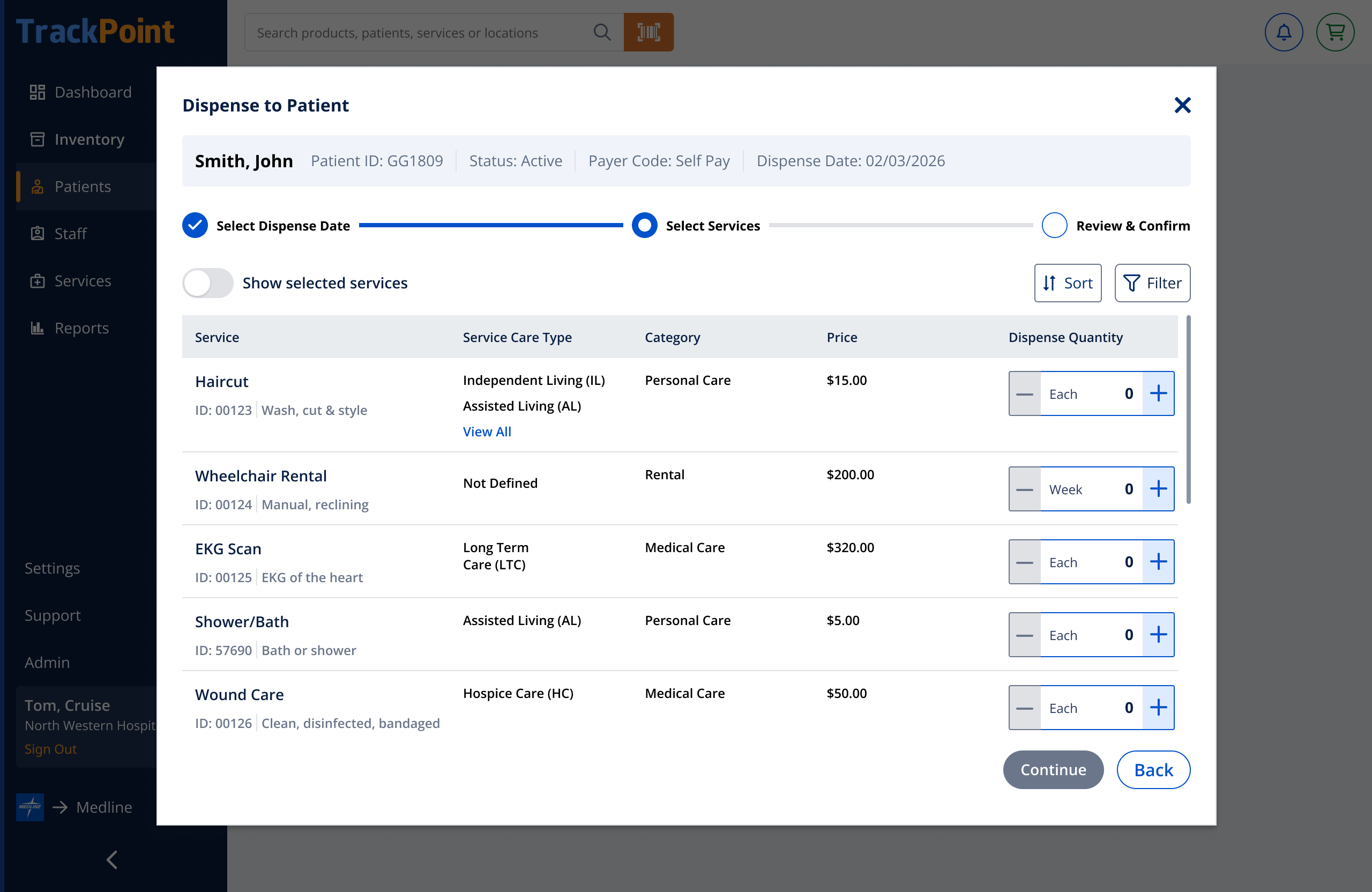
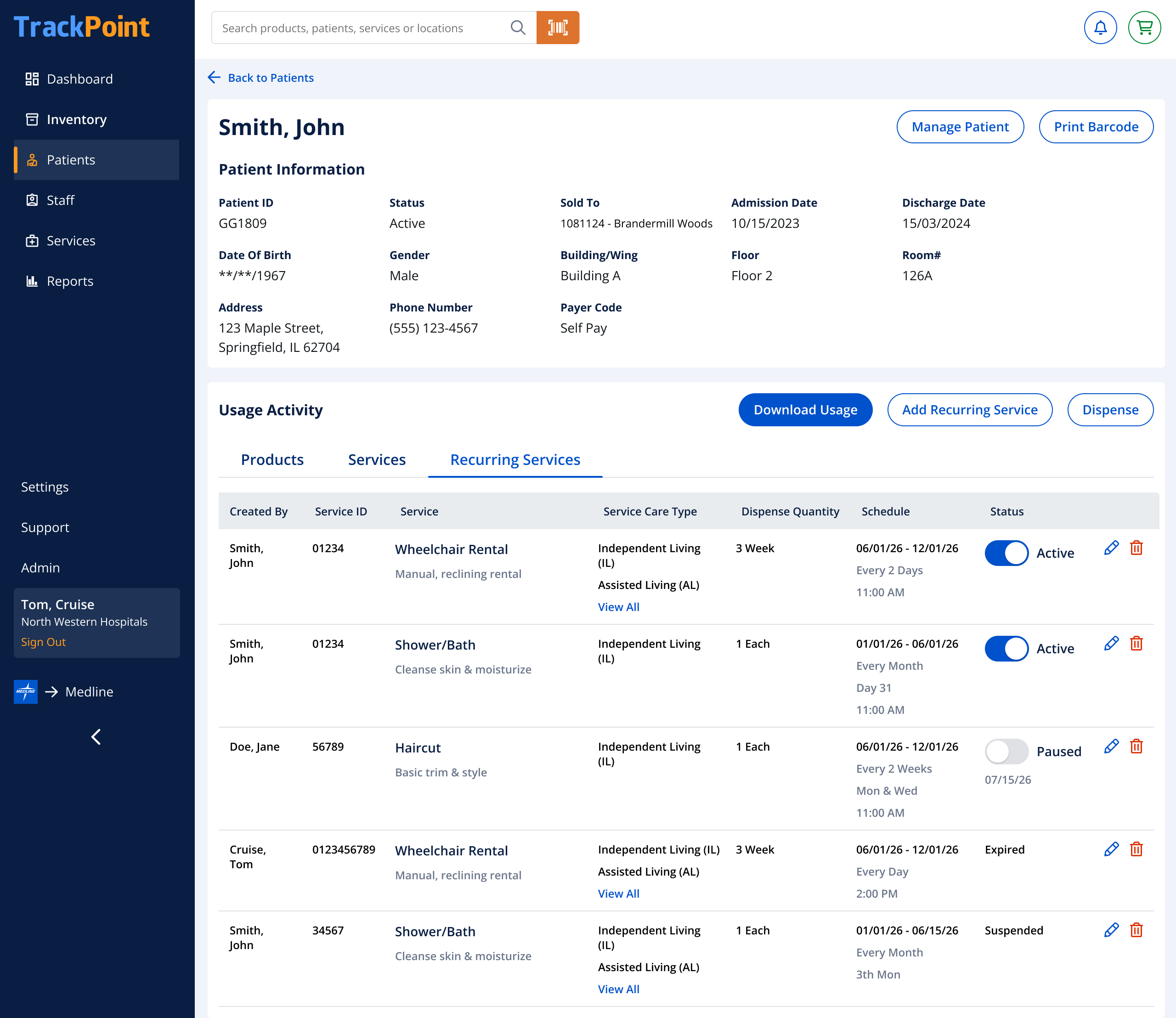
Small and medium-sized healthcare providers rely on manual processes and disconnected tools to manage supplies and track patient usage. Limited visibility and fragmented workflows create extra work, make reordering harder, and increase the risk of inventory and billing errors.
Limited inventory visibility
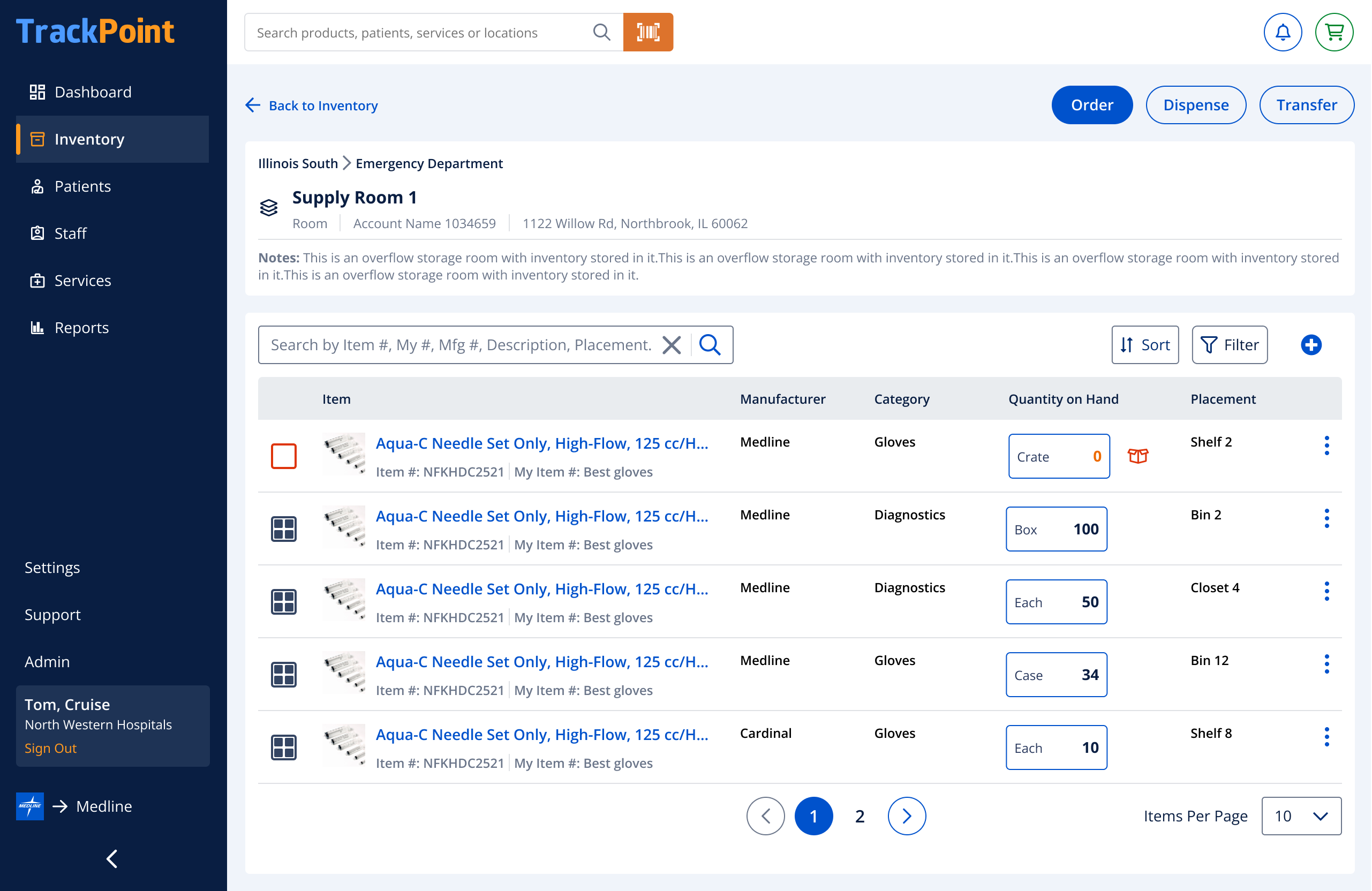
Staff struggle to know what’s available and where supplies are stored across locations.
Manual, fragmented workflows
Spreadsheets, paper logs, and disconnected systems make tracking and reordering supplies time-consuming and error-prone.
Difficult patient usage tracking
Recording supplies and services used by each patient takes extra effort, complicating reconciliation and accurate billing.
02
Our Customer & User
We conducted multiple rounds of one-on-one user interviews across non-acute care settings, including nursing homes, assisted living facilities, surgery centers, and a physician office. We explored their daily responsibilities and how they manage supplies, uncovering friction in inventory tracking, ordering, and staff communication.

Admin Adam
A materials manager balancing supply availability and costs. Needs clearer stock visibility and reliable ordering information.
Clinician Claire
A clinician juggling patient care and inventory tasks. Needs a simple way to find supplies and track changes without relying on memory or manual notes.
Director Dan
A leadership persona representing oversight of care teams and facility operations.
03
Challenge
The challenge was designing a simple, consistent experience amid complexity inside and outside the organization. Internally, we had to navigate fragmented data and a complex technology stack without compromising usability. Externally, differences in facility environments, supply organization, and daily routines required a solution flexible enough to support varied workflows.
04
Solution
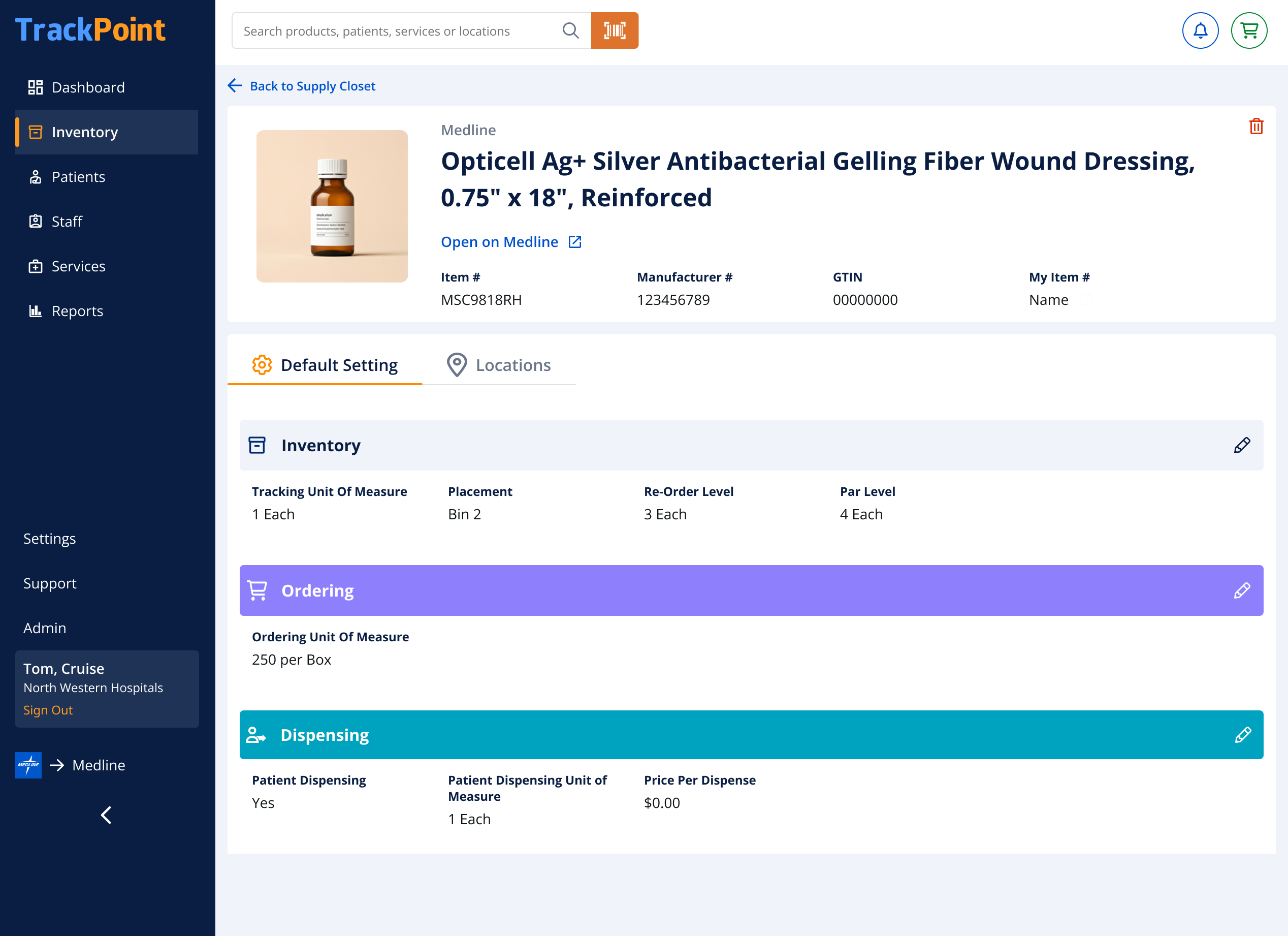
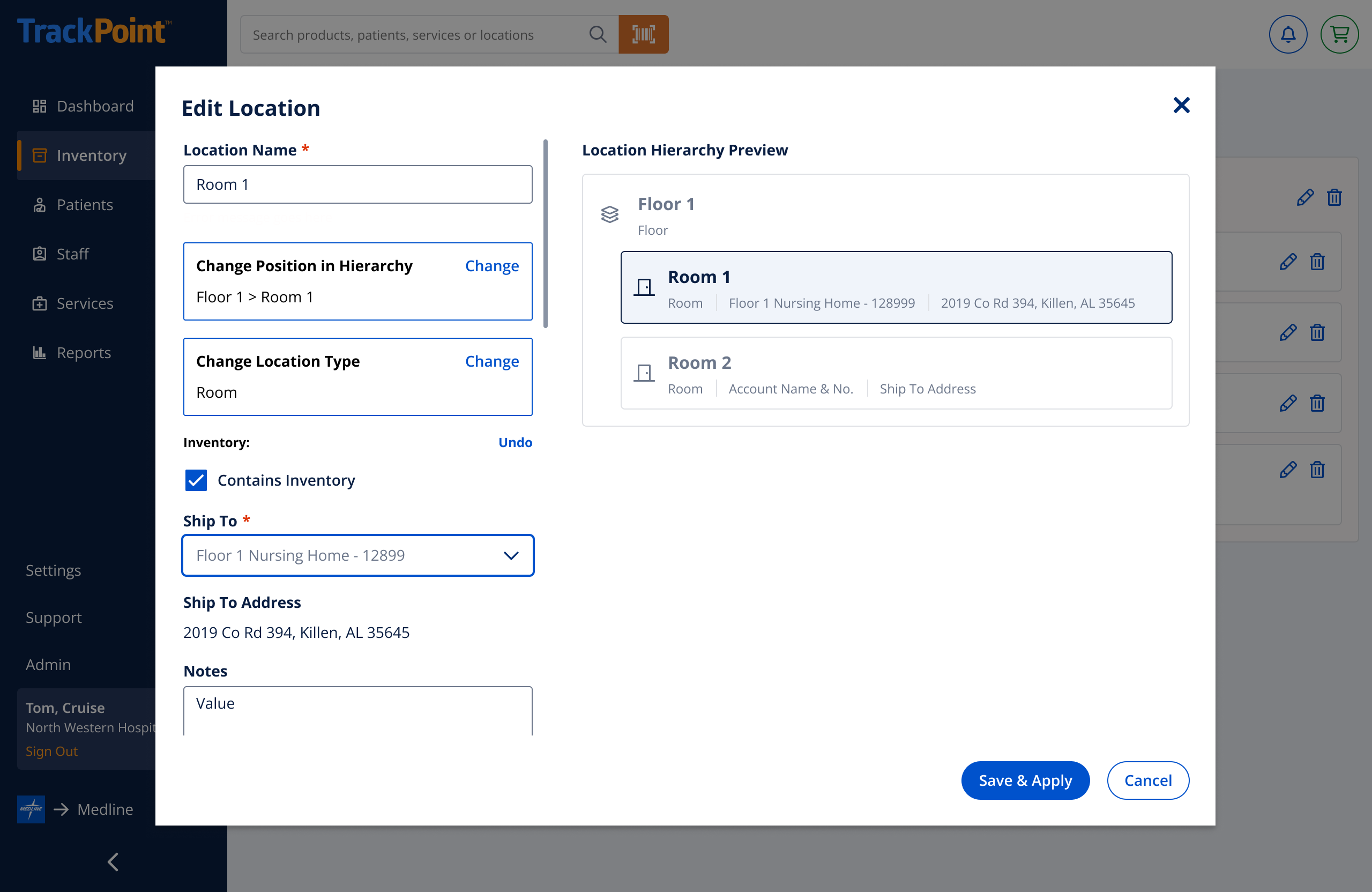
We expanded beyond the screen to connect digital workflows with the physical work of managing supplies across care locations. By grounding the experience in how users understand locations, units of measure, and patient information, we designed a system that fits how they organize and carry out their daily work.

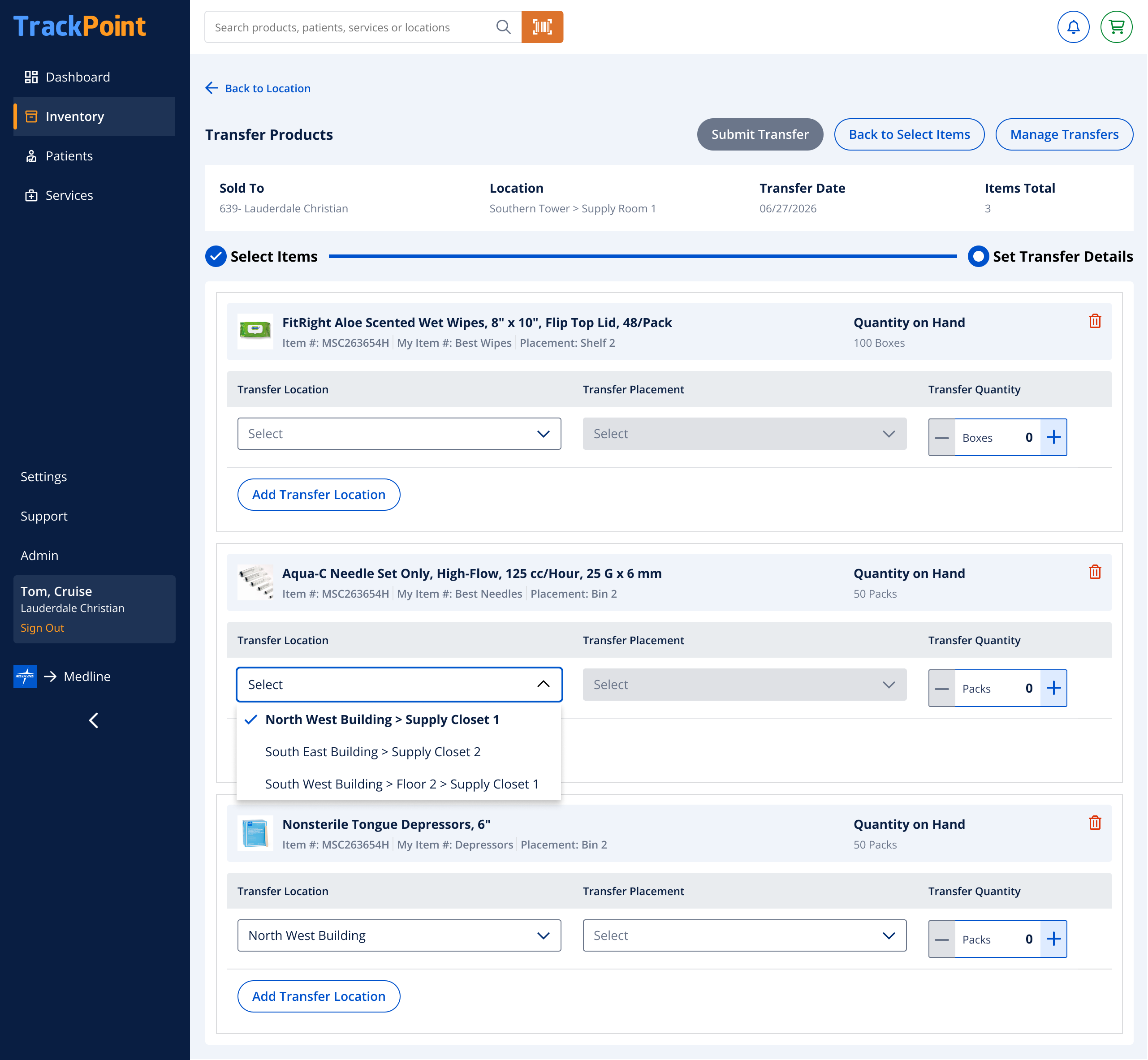
Customer Semantic Model: Product and Location
Connect inventory tasks to the places where care happens. The workflow brings locations, supplies, and patient usage into a shared context for everyday work.
Unit of Measure: Add, Track & Dispense
Bring supply tracking into the flow of patient care. The mobile experience focuses on clear, simple tasks that support clinicians as they find supplies and record usage.